Skip to content
Electrical Blog
  • Home
  • Tools
  • About Us
  • Contact Us
  • Privacy Policy
Electrical Blog
  • ABCD Parameters: Interactive Learning
  • About Us
  • All guides
  • Contact Us
  • Downloads
  • Duplicate Remover
  • Home
  • Interactive Power System Y Bus & Z Bus Matrix Calculator
  • Learn Power Systems
  • Pin Posts
  • Power Calculator Pro
  • Privacy Policy
  • Tools
    • CT sizing calculator: knee point and 5P10 / 5P20 check (IEC 61869-2)
    • Fault current calculator: short circuit current at a transformer (IEC 60909)
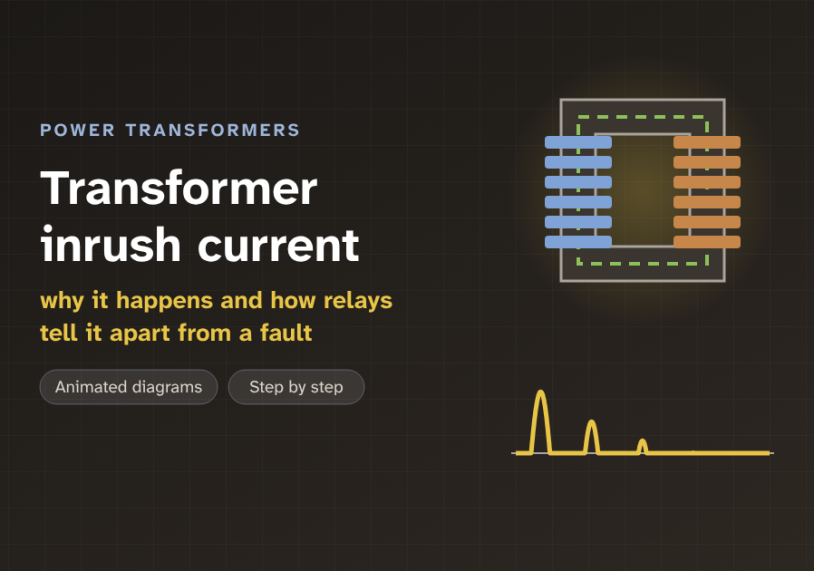
What is transformer inrush current, and why does it happen?

What is transformer inrush current, and why does it happen?

In this guide we switch on one transformer and follow its core flux, with animated diagrams, to see why the current jumps and how relays stay calm.

What is transformer inrush current, and why does it happen? Read More »

How selective coordination works, and why only the nearest device should trip

How selective coordination works, and why only the nearest device should trip

In this guide we follow one short circuit from a small branch back to the source, with animated diagrams, and see how the right breaker opens while the rest of the system stays on.

How selective coordination works, and why only the nearest device should trip Read More »

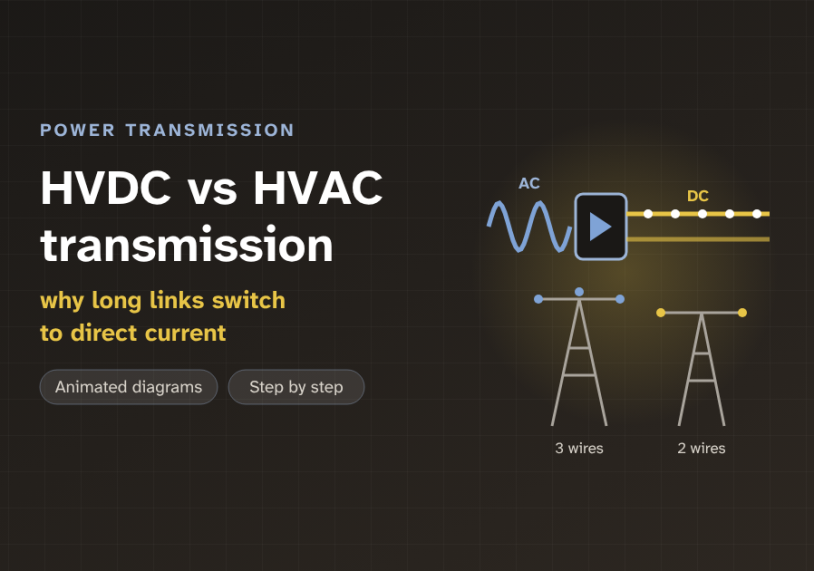
HVDC vs HVAC: why long power links switch to direct current

HVDC vs HVAC: why long power links switch to direct current

In this guide we send power down a long line, first as AC and then as DC, with animated diagrams, and find the distance where DC starts to win.

HVDC vs HVAC: why long power links switch to direct current Read More »

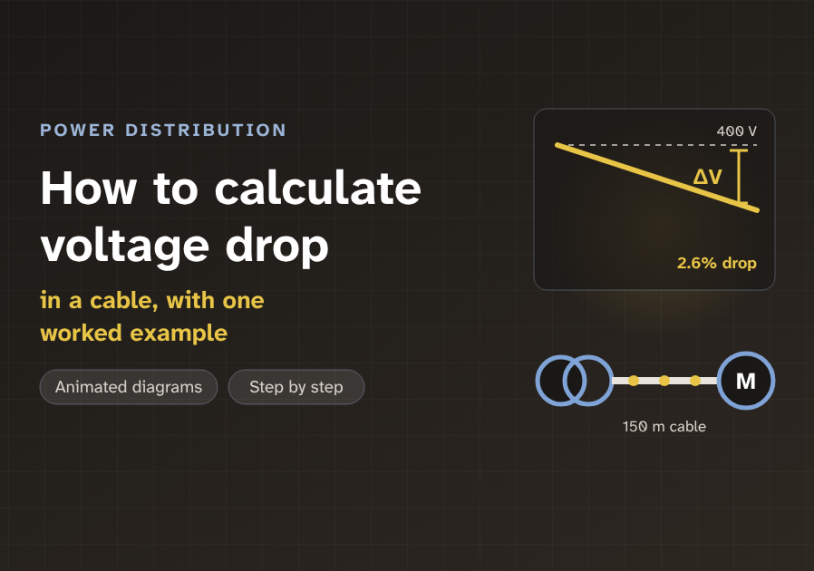
How to calculate voltage drop in a cable, step by step

How to calculate voltage drop in a cable, step by step

In this guide we follow the current along one real feeder, with animated diagrams, and work out how much voltage the load really gets.

How to calculate voltage drop in a cable, step by step Read More »

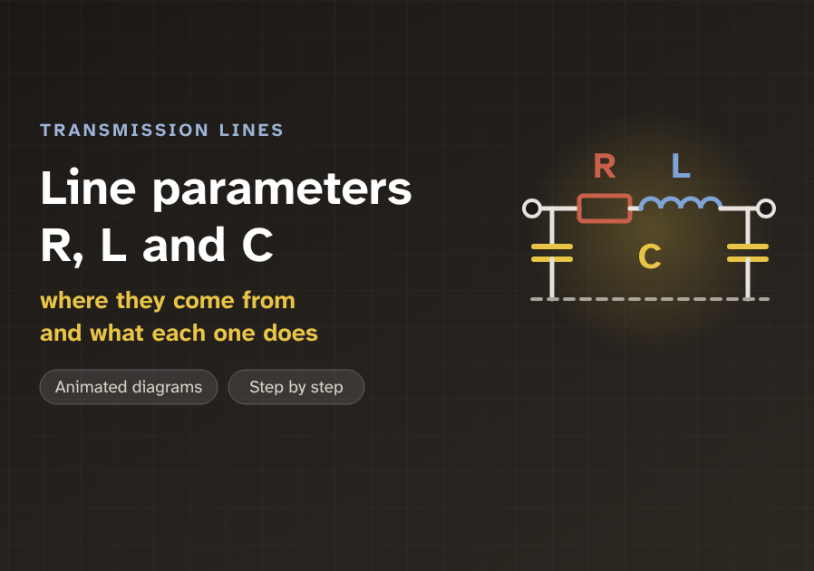
What transmission line parameters R, L and C are, and why they matter

What transmission line parameters R, L and C are, and why they matter

In this guide we follow current along one high-voltage line, with animated diagrams, and see where its resistance, inductance and capacitance come from and what each one does.

What transmission line parameters R, L and C are, and why they matter Read More »

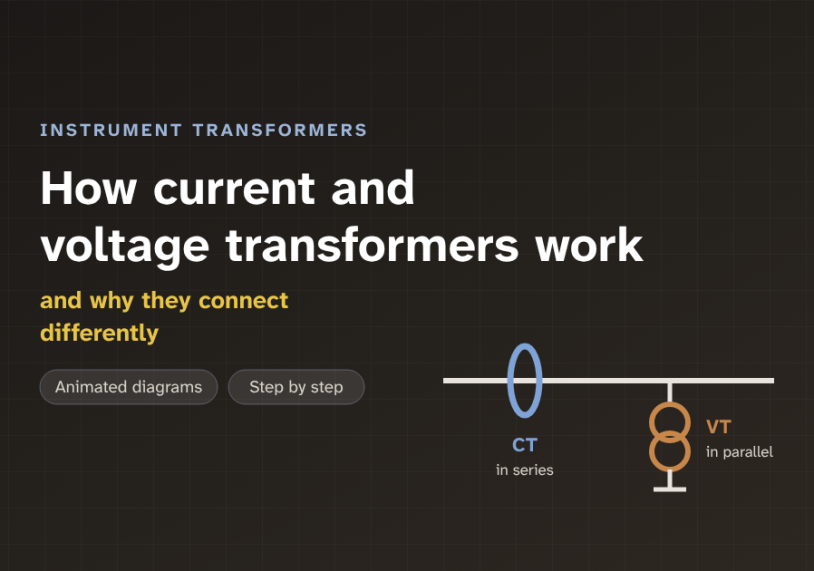
How current and voltage transformers work, and why they connect differently

How current and voltage transformers work, and why they connect differently

In this guide we follow one line signal from the high-voltage line to a relay, with animated diagrams, and see why a CT must never be opened and a VT must never be shorted.

How current and voltage transformers work, and why they connect differently Read More »

How a synchronous generator works, and how it stays in step

How a synchronous generator works, and how it stays in step

In this guide we follow one spinning rotor from the turbine to the grid, with animated diagrams, and see how a generator keeps in step with hundreds of others.

How a synchronous generator works, and how it stays in step Read More »

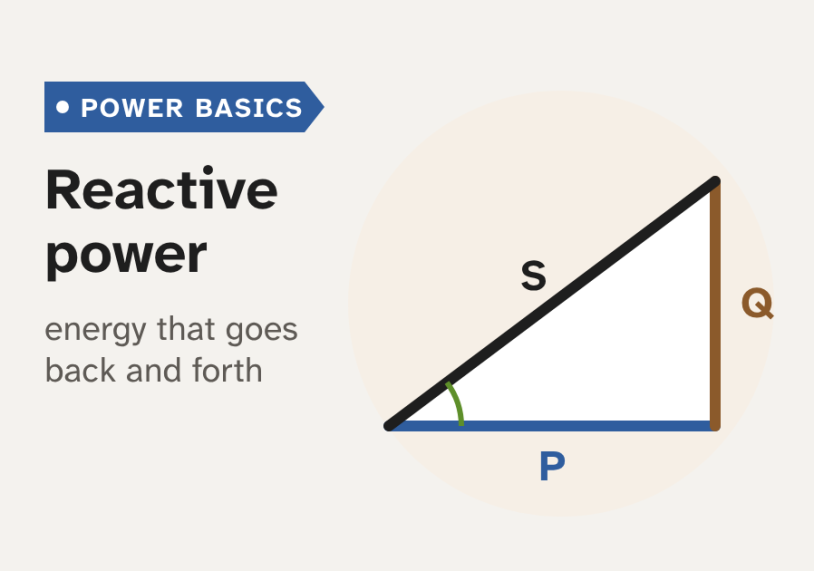
What is reactive power

What is reactive power, and why does the grid care?

In this guide we follow power around one motor circuit, with animated diagrams, and see why reactive power does no work but still matters.

What is reactive power, and why does the grid care? Read More »

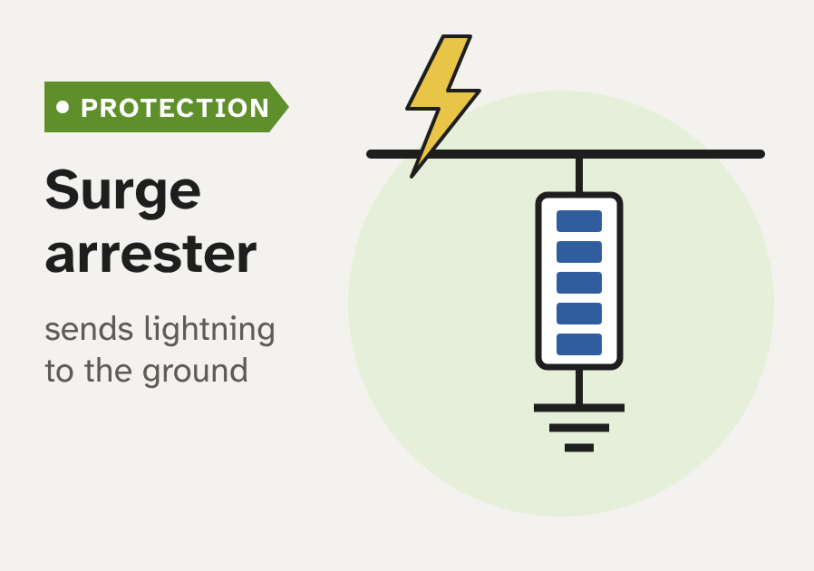
How a surge arrester works

How a surge arrester works, and what insulation coordination means

In this guide we follow one lightning surge from the sky to the ground, with animated diagrams, and see how

How a surge arrester works, and what insulation coordination means Read More »

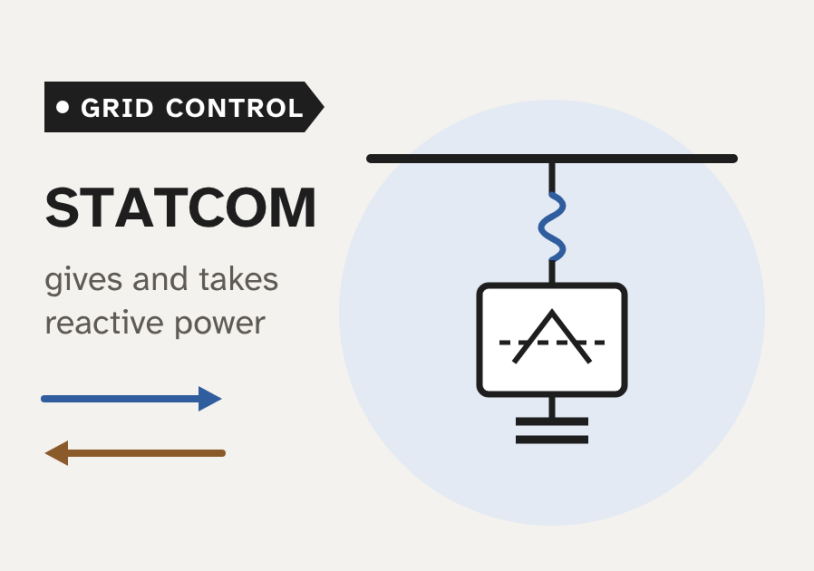
How a STATCOM works

How a STATCOM Works: A Simple Step-by-Step Guide

Here is what each part does: The Voltage Source Converter (VSC). This is the heart of the STATCOM. It uses fast

How a STATCOM Works: A Simple Step-by-Step Guide Read More »

1 2 … 12 Next →

Copyright © 2026 Electrical Blog | Powered by Astra WordPress Theme