Electrical circuits are the backbone of modern technology, powering everything from our homes to our industries. At the core of an electrical circuit are three essential components: resistors, capacitors, and inductors. These components work together to control the flow of electrical current and voltage.
The relationship between current, voltage, and resistance is described by Ohm’s law, which states that the current flowing through a circuit is directly proportional to the voltage applied and inversely proportional to the resistance of the circuit. Mathematically, this can be expressed as:
V = I × R
Where:
V is the voltage (in volts, V)
I is the current (in amperes, A)
R is the resistance (in ohms, Ω)
This fundamental equation allows us to understand the behavior of electrical circuits and predict the flow of current and voltage.(Tural-Polat & Dincel, 2023)
Electrical Overload
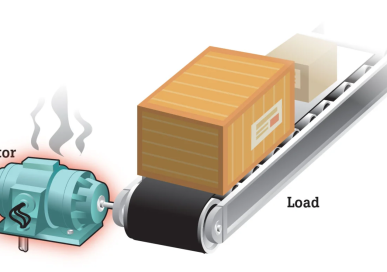
Electrical overload occurs when the current flowing through a circuit exceeds the designed or rated capacity of the circuit components, such as wires, transformers, or motors. This can happen due to various reasons, including:
Increased load: When more electrical devices are connected to the circuit than it was designed to handle, the current draw increases, leading to an overload.
Short circuit: A short circuit is a direct connection between two points in a circuit with little or no resistance, causing a sudden surge of current that can lead to an overload.
Equipment failure: Malfunctioning or aging electrical components can cause an increase in current draw, resulting in an overload.
The consequences of an electrical overload can be severe, including:
Damage to electrical equipment: Excessive current can overheat and damage wires, transformers, motors, and other components, potentially leading to fire hazards.
Tripping of circuit breakers or blowing of fuses: Overload protection devices are designed to interrupt the circuit when the current exceeds a safe level, preventing further damage. (Cheng & Lang, 2022)
To prevent electrical overloads, it is essential to ensure that the circuit is designed and installed with the appropriate capacity to handle the expected load. This may involve using larger-gauge wires, higher-rated circuit breakers, or properly sized transformers. Regular maintenance and inspection of the electrical system can also help identify and address potential overload issues before they become a problem.(Deji et al., 2023)
Short Circuit
A short circuit occurs when a low-resistance connection is formed between two points in an electrical circuit, bypassing the normal load. This can happen due to various reasons, such as:
Damaged insulation: Worn or damaged insulation on wires can allow the conductors to come into direct contact, creating a short circuit.
Faulty connections: Loose or improper connections in the circuit can lead to a short circuit.
Accidental contact: Foreign objects, such as tools or debris, can accidentally bridge the gap between two conductive parts, causing a short circuit.
When a short circuit occurs, the current flowing through the circuit can increase dramatically, potentially reaching hundreds or even thousands of times the normal operating current. This sudden surge of current can cause significant damage to the circuit components, including:
Overheating and melting of wires and connections
Tripping of circuit breakers or blowing of fuses
Potential fire hazards
To protect against short circuits, electrical systems are typically equipped with circuit breakers or fuses. These devices are designed to quickly interrupt the flow of current when a short circuit is detected, preventing further damage to the circuit and potential fire hazards.(Qiao, 2023)
Earth Fault
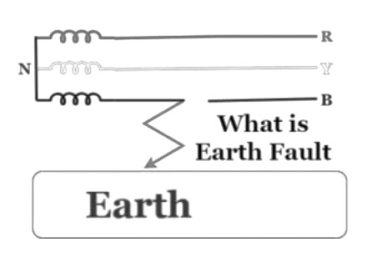
An earth fault, also known as a ground fault, occurs when a live conductor in an electrical circuit comes into contact with the earth or ground. This can happen due to various reasons, such as:
Insulation failure: Damaged or deteriorated insulation on wires or equipment can allow the live conductor to come into contact with the ground.
Accidental contact: Foreign objects or conductive materials can accidentally bridge the gap between a live conductor and the ground.
Faulty equipment: Malfunctioning or improperly grounded electrical equipment can lead to an earth fault.
When an earth fault occurs, the current flowing through the circuit can bypass the normal load and flow directly to the ground. This can result in several issues, including:
Potential electric shock hazard: The flow of current through the ground can create a dangerous voltage difference, putting anyone in contact with the ground at risk of electric shock.
Tripping of circuit breakers or blowing of fuses: Protective devices are designed to interrupt the circuit when an earth fault is detected, preventing further damage.
Damage to electrical equipment: The sudden surge of current can overheat and damage wires, transformers, and other components.
To prevent and mitigate the risks of earth faults, electrical systems are typically equipped with ground fault circuit interrupters (GFCIs) or residual current devices (RCDs). These devices are designed to quickly detect an earth fault and interrupt the circuit, protecting both people and equipment from potential harm.(Saeed et al., 2017, pp. 18654–18664)
By understanding the fundamentals of electrical circuits, as well as the causes and consequences of electrical overloads, short circuits, and earth faults, students and engineers can better design, install, and maintain safe and reliable electrical systems. Proper planning, implementation, and regular maintenance are crucial in ensuring the safe and efficient operation of electrical infrastructure.